The Heritage of Door Access Systems
Published on : February 20, 2026
Overview
- From ancient wooden locks to modern smart access systems, door access technology has evolved dramatically over thousands of years.
- The rise of RFID, biometrics, and cloud-based IP systems enabled faster, touchless, and centralized control.
- Today, advanced solutions like ELID’s Matrix V and Clover platform provide real-time monitoring and robust protection for modern facilities.
Imagine a time when securing industrial facilities meant carrying a separate metal key for every door, or when hotel guests relied on manual check-ins and paper keys. Over the decades, door access technology has evolved—from traditional mechanical locks to electronic keycards and now fully networked smart systems.
Tracing the heritage of door access systems not only highlights these technological advancements but also helps facility leaders understand the importance of adapting to modern solutions. Today’s security upgrades streamline entry management, integrate seamlessly with broader security networks, and combine protection and convenience like never before.
Ancient Origins (c. 2000 BC-6000 years ago)

Protecting valuable possessions and property from theft and unauthorized access was a constant challenge in ancient times. Early civilizations addressed this problem by inventing mechanical locks that physically barred entry while allowing authorized access.
The first known lock was made from a large block of wood using a simple pin-tumbler mechanism. A hand-sized hole allowed users to lift the bolt with long wooden or metal prodders. Over time, the Egyptians improved this design by adding wooden pegs that fell into the bolt holes, which required only the proper key to open the lock.
Later, the Romans upgraded these wooden locks to metal, creating bronze keys that resemble modern designs. They also introduced warded locks, adding internal projections and obstructions so that only a key of the correct shape could engage or disengage the mechanism.
1950s-1960s (Electronic Dawn)
Protecting facilities and monitoring multiple entry points in real time was difficult, as organizations still relied heavily on security guards. Companies sought alternative solutions that could enhance security without requiring constant human supervision.
The first steps toward electronic access control began to appear with exit alarms, which could instantly alert staff to unauthorized door or window use while integrating with existing master key systems using standard pin cylinders. In addition, identification badges and laminated cards became common at government facilities, which enables personnel to be verified quickly and efficiently.
Although these technologies were still nascent and limited, they offered a glimpse into the future of door access control in the decades that followed.
1970s (Wiegand & Magnetic Stripe)
Electronic systems became more sophisticated as organizations sought more efficient and secure ways to control access. The Wiegand effect and magnetic stripe technology were introduced in this era, where access credentials were encoded and read electronically.
- Wiegand Technology: Used specially embedded wire patterns in cards that could be read by a sensor to grant access. It offered unique, tamper-resistant credentials, ideal for high-security environments.
- Magnetic Stripe Cards: Encoded user information on a thin stripe that could be swiped through a reader.
These upgrades laid the groundwork for modern card-based access solutions, bridging the gap between early electronic alarms and advanced smart access systems.
1990s (RFID & Contactless)
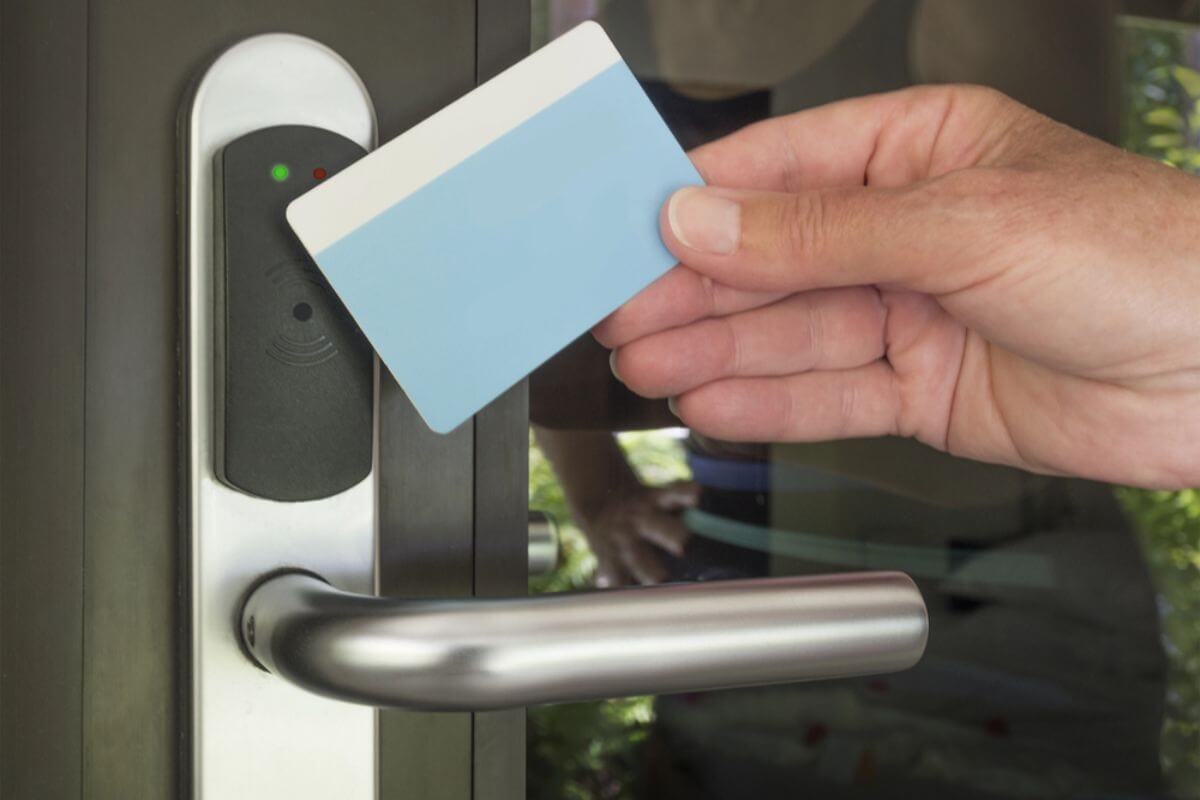
This period saw the rise of Radio-Frequency Identification (RFID) and contactless access systems, allowing users to unlock doors without physically inserting a key or swiping a card. These innovations paved the way for faster, more convenient, and secure access, which transformed the way organizations managed entry to their facilities.
- RFID transmits credentials from a card or fob to a reader using radio waves, enabling quick and touchless entry.
- Contactless cards enable wireless access or payments by using RFID or NFC technology embedded in a chip and antenna within the card.
Today, these contactless principles are applied in advanced door access systems like ELID’s Matrix V, which uses RFID credentials to provide real-time access monitoring, centralized control of multiple entry points, and detailed activity logging—demonstrating how RFID technology has evolved from simple card-based entry into a comprehensive security management solution.
2000s-Present (IP & Smart Technology)
As manufacturing facilities expanded and operations became more distributed, access management was no longer limited to simply locking and unlocking doors. Organizations require real-time visibility to maintain security without adding staff.
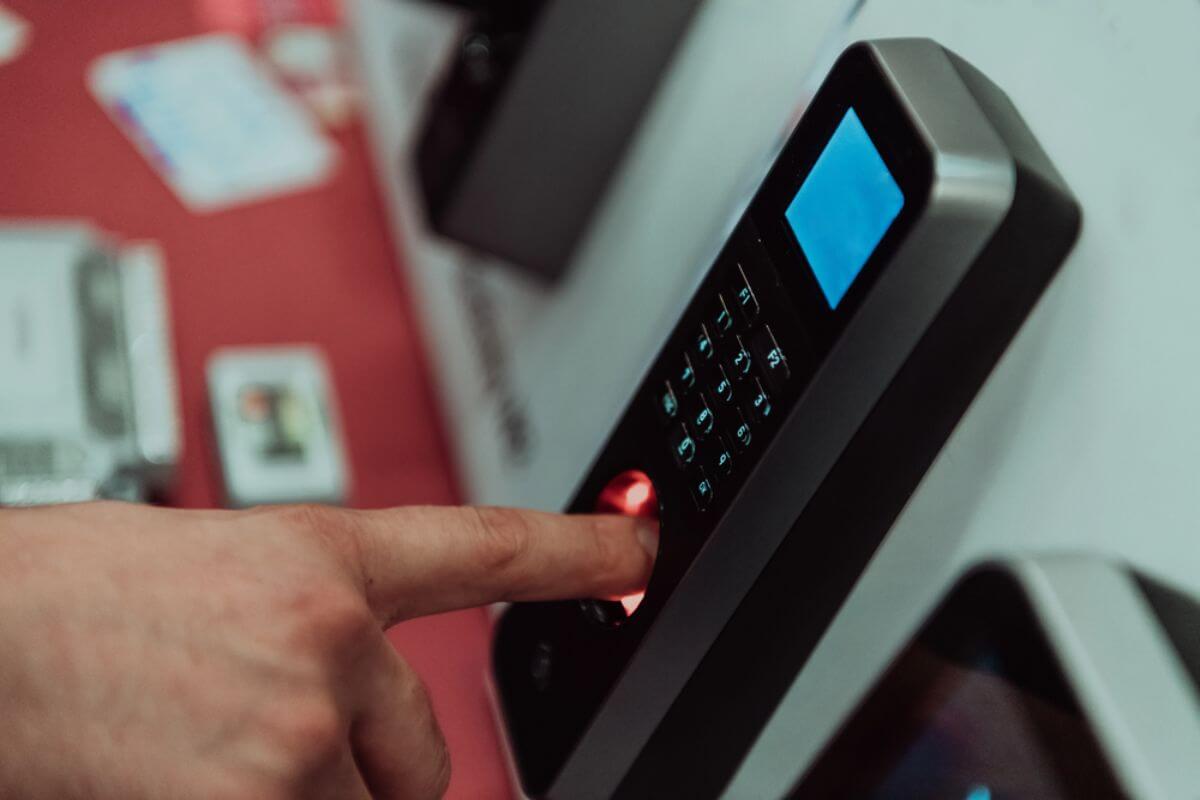
From the mid-2000s onward, innovations like biometric authentication (fingerprints, facial recognition), mobile credentials via apps and Bluetooth, and cloud-based platforms enabled instant access changes. IoT sensor integration and AI-powered analytics further enhanced security by providing real-time alerts and predictive insights.
ELID offers several IP-based smart access control products tailored for modern facilities. Our Cloud-Based System is a fully IP/cloud platform for distributed sites, which enables remote RFID credential management, mobile access, and integration with CCTV and alarms—without the need for on-premise servers.
Evolution of Technology
Door access systems have come a long way. Over the decades, this evolution has transformed how people gain access, how facilities are monitored, and how organizations maintain control and accountability.
- Authentication: Transition from mechanical keys to RFID/contactless cards, biometrics, and mobile credentials for faster, secure, and convenient access while supporting multi-factor authentication for sensitive areas.
- Networking: Shift from standalone systems to IP/networked systems and cloud-enabled centralized management for real-time monitoring and remote configuration.
- Intercoms: Progression from basic wired intercoms to IP-based voice/video intercoms, fully integrated access control and communication systems, to provide real-time visitor verification, and remote unlocking.
Key Takeaway
The heritage of door access systems shows that security technology has always evolved to meet the needs of the time—from mechanical locks to cloud-based smart solutions.
Today, modern facilities can achieve real-time monitoring, centralized control, and seamless integration with solutions like ELID’s Matrix V, Cloud-Based System, and more.
Protect your people, assets, and operations with advanced access management—contact ELID today to explore the right system for your facility.