



Overview
This article explains simplifying RFID ideas and principles for inventory management by breaking down how the technology works in practical terms.
It covers core RFID components such as tags, readers, no line-of-sight capability, bulk reading, and real-time visibility, showing how each supports better inventory tracking.
The goal is to help facility managers understand RFID in a clear and application-focused way for everyday operations.
When you come across RFID (Radio Frequency Identification) for the first time, it can feel highly technical. It’s often filled with terms that aren’t always easy to connect with everyday inventory work. While it is widely used in modern facilities, its core principles are not always explained in a way that connects directly to practical workflows.
That’s why simplifying RFID ideas and principles for inventory management matters. It helps turn a technical concept into something more practical and easier to apply in real facility settings.
Breaking down how RFID works clearly and practically makes it easier to see how it actually supports inventory tracking without complexity getting in the way.
Core RFID Principles Simplified

The value of RFID becomes clearer when its core ideas are simplified into operational elements that directly relate to inventory management.
Tags
These are small electronic devices attached to products, tools, or equipment to enable automatic identification and tracking. They act as the “ID” of each asset, allowing items to be recognized without manual input or scanning. For example, ELID provides industrial RFID tags, including passive tags for equipment, IT devices, and tools, as well as compact tags for small hand tools and durable on-metal tags.
Readers (Antennas)
They work by emitting radio frequency signals that create an “interrogation zone”, so nearby tags are automatically detected. When a tag enters this zone, the antenna emits electromagnetic waves that power and activate passive tags, which don’t have an internal power source. Once activated, the tag transmits its stored data back to the antenna, which then relays it to the reader for processing and identification.
No Line-of-Sight
Unlike barcodes that must be directly visible, RFID tags can be read even when they are hidden or not facing the reader. This allows RFID readers to detect tags through materials such as cardboard boxes, plastic wrapping, wood, or fabric without unpacking items. As a result, entire pallets or shelves can be scanned at once, even if the tags are inside sealed containers.
Bulk Reading
RFID systems like AseTrak can capture hundreds or even thousands of tags within seconds or minutes. This makes large-scale inventory environments significantly easier to manage compared to item-by-item scanning methods. For instance, a handheld reader equipped with RFID can move through aisles and instantly capture all tagged assets within range. So, there’s no need for individual handling or manual scanning.
Real-time Visibility
Real-time visibility in RFID systems like ELID’s AseTrak ensures that asset information is automatically updated as tagged items move through monitored zones, eliminating the need for manual logs or periodic checks. The system continuously reflects what is happening on the ground. For example, as tools or materials move within a warehouse, AseTrak provides instant updates that can flag discrepancies, maintenance needs, or unusual movement patterns.
Key Benefits
The real value of RFID is not just in how it works, but in how it improves time, accuracy, and control across inventory processes.
Massive Time Savings
RFID significantly reduces the time spent on routine inventory tasks by eliminating the need for manual scanning and physical counting. Instead of checking items one by one, multiple assets can be identified and recorded automatically in a single pass. With features like bulk reading and no line-of-sight scanning, inventory checks that used to take hours can now be completed in minutes.
High Accuracy
Each tag contains a unique identifier, ensuring that every asset is correctly recognized and recorded without duplication or misidentification. This eliminates common issues such as missed scans, incorrect entries, or outdated records. With consistent and automated data capture, facility managers can rely on more accurate inventory information.
Reduced Labor Costs
Counting, locating, and recording assets can be handled automatically, reducing the reliance on large teams for these activities. As a result, businesses can allocate their workforce to more critical tasks, improving overall productivity while keeping labor costs under control.
Theft Reduction
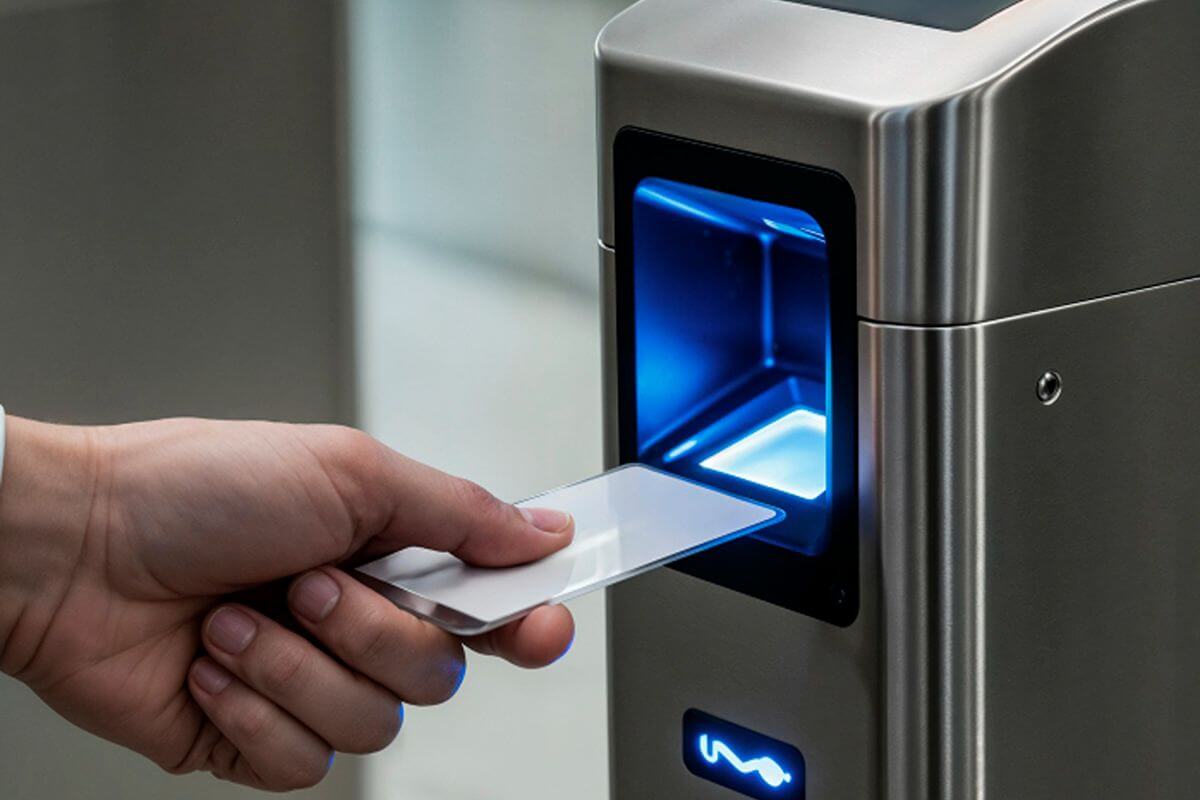
When RFID readers are installed at entry and exit points, they can detect unauthorized movement and trigger real-time alerts. Instead of relying on manual checks, assets can be continuously monitored as they pass through designated areas. This makes it easier to identify unusual activity and respond quickly before losses occur.
Key Takeaway
Simplifying RFID ideas and principles for inventory management transforms complex technology into practical everyday applications that improve visibility, accuracy, and control.
At ELID, we help you translate RFID concepts into real operational systems through our advanced AseTrak solutions, so asset tracking turns into more structured and reliable.
To learn how we can support your facility’s inventory management needs, you may reach out to us for tailored assistance and system integration.